Pope John Paul II
Blood CanticlePope John Paul II is presented as an elderly, physically suffering pope whose quiet encounter with Lestat joins personal vulnerability to a broad argument about religion, modernity, and charity. The scene’s decisive turn is that Lestat’s vision of healing and papal recognition gives way to the knowledge that he is neither a saint nor present in the Vatican: the episode reveals as much about his longing for holiness as it does about the pontiff.
Identity and Introduction
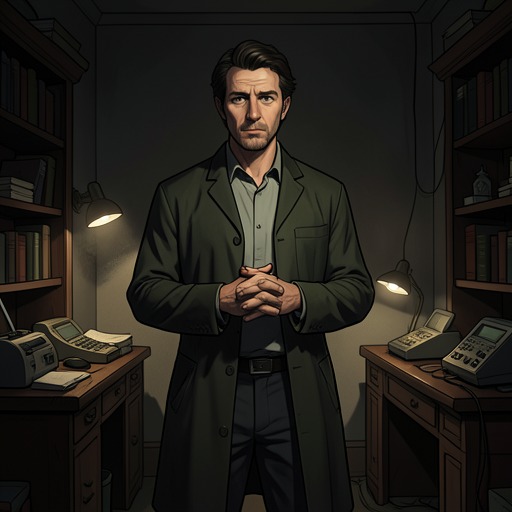
In Lestat’s imagined apparition, the eighty-two-year-old Pope lies awake in his bedroom in Vatican City, where the sparse furnishings resemble a monk’s cell despite the palace’s scale. Parkinson’s disease, arthritis, and pain disturb his rest. The private setting presents him not first as a distant religious authority but as an aging man living with illness and physical limitation.
The Pope greets Lestat in English and asks why he has come rather than Padre Pio, a saint he loved. Lestat interprets the question as understandable rather than insulting. The exchange places the pontiff’s devotion to Padre Pio alongside Lestat’s uncertainty about whether the Pope could love him as a saint, a status the narrator admits he has not yet written into his story.
The Apparition and Its Reversal
Lestat says that he lays healing hands on the Pope and banishes his suffering. In the stillness that follows, he reads the Pope’s character through the history that shaped him: a life under Communism and the violence of the Second World War. Lestat sees deprivation and self-denial as formative, and suggests that this history helps explain the Pope’s suspicion of wealthy capitalist societies and his difficulty recognizing forms of charity made possible by abundance.
That encounter belongs to Lestat’s fantasy of himself as a canonized saint. He imagines being summoned to appear to people, visits the Pope, and takes the role of spiritual adviser. Yet the imagined healing and the Pope’s attentive response cannot establish the reality of the apparition. After leaving the bedroom, Lestat imagines going down to the Sistine Chapel, where the desire to become a priest and consecrate the host collides with his fear that he is evil.
The vision then dissolves: Lestat acknowledges that he is not in the Sistine Chapel, that no ceremony canonized him, and that he does not possess a cure for the world’s drug crisis. He identifies himself instead as a vampire who has lived by drinking blood. The Pope’s place in the scene thus frames Lestat’s yearning, but the scene ends with that yearning unfulfilled.
Faith, Modernity, and Charity
Lestat’s imagined conversation turns into an argument that the Church should not treat modern developments as signs of catastrophe or as the end of history. He describes modernism and materialism as still in their infancy and urges the Pope to recognize their possible sacramental character. In this vision, technological change is not inherently opposed to spiritual life; its value depends on what people do with the new capacities it creates.
Lestat argues that prosperity can make new forms of generosity possible, and that supposedly secular societies remain shaped by Judeo-Christian moral expectations. He predicts that communications, medical science, and broadly distributed goods and services could reduce poverty, hatred, violence, and addiction. His account of future “Techno-saints” casts technology as a potential instrument of service rather than an enemy of faith, while his discussion of sexuality and scientific control of procreation presents greater knowledge as something that religious people should meet with courage.
The imagined Pope listens and smiles. He jokes that he would laugh at Lestat if Lestat were not a saint, then asks when the Techno-saints are expected. Lestat takes this response as a sign that the visit has been worthwhile. But the narrative reversal makes the exchange double-edged: the Pope’s receptive presence belongs to the fantasy that Lestat himself later disavows.
Canonization and Juan Diego
Outside the imagined meeting, the narration recalls that Pope John Paul II travelled to Mexico and canonized Juan Diego, whom Lestat describes as the Indigenous man to whom the Virgin of Guadalupe appeared in 1531. In the account, a local bishop initially ignores Juan Diego’s report; roses blooming in snow and an image of the Virgin on his cactus-fiber tilma then provide the signs that persuade him. The tilma remains on display in Mexico City, where visitors come to see it.
Lestat is moved by the story and by the Pope’s decision to canonize Juan Diego. He speculates that a saint, whether or not skeptics can establish the person’s historical existence, may receive prayers and carry the faithful’s petitions to God. The account underscores the public and devotional consequences of canonization: Juan Diego becomes a focus of prayer for people across communities, while the image associated with him reaches believers far beyond its original setting.
Lestat also admits envy. He notes that Pope John Paul II had canonized 463 saints during his lifetime and connects his own writing to his wish to receive official recognition. The contrast is central to the character portrait: the Pope acts within the Church’s authority to confer sainthood, whereas Lestat’s imagined title cannot survive his return to reality. His account of the pontiff therefore holds together religious admiration, a debate about the future of faith, and a revealing portrait of Lestat’s desire to be declared holy.